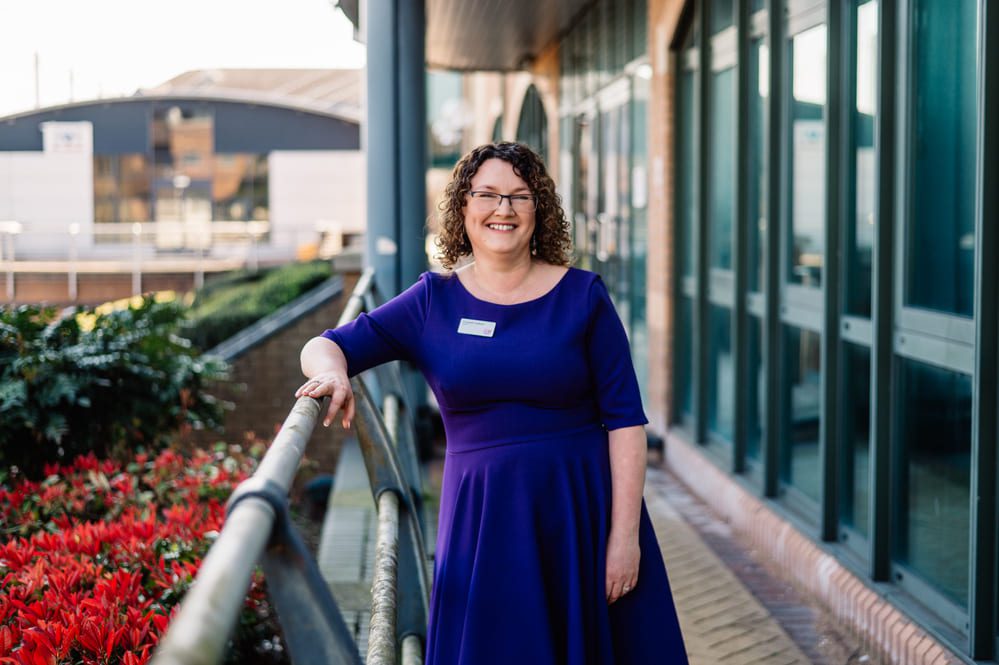
Never in a million years did I think I would one day pose for photos outside a particular office building with a beaming smile on my face…
For many people, certain places become associated with important moments in their lives. Sometimes those memories are positive, and sometimes they are anything but. The building in question was once home to an organisation where I had one of the most challenging professional experiences of my career. At the time, I wanted nothing more than to never think about, interact with, or be physically near that building ever again.
The Myth of the “Safe” Job
For much of my career, I ran my own successful business while also holding part-time employed roles. Like many people, I convinced myself that this was the sensible option. My business gave me freedom and fulfilment, but employment felt like a safety net. Or so I thought.
I entered that building on an absolute high, having been head-hunted for an extremely senior role in the organisation. 10 weeks later, I was packing my office into cardboard boxes and heading out of the door for the last time. To make matters worse, two days earlier I had given notice on my other ‘safety job’ which I had held onto until I was sure that the new role was for me, even though I still had major misgivings about the new organisation and my place within it. I don’t really know quite what I was thinking, but in the space of 48 hours I’d gone from two jobs to no jobs, and the feeling was terrifying!
What that difficult experience taught me was something that, in hindsight, should have been obvious all along: employment is not automatically more secure than self-employment. That realisation ultimately became the turning point that changed everything for me.
Taking the Leap
When we work for someone else, our future is often influenced by decisions we have little control over. Organisational changes, management decisions, restructures, funding challenges and workplace relationships can all affect our careers, regardless of how well we perform.
Running a business comes with risks, of course, but it also gives you total control of your own destiny. If you’re your own employer, you’re responsible for your own decisions, your own direction and your own future, and let’s face it, it’s fairly unlikely that you are going to sack yourself!
Finding myself temporarily unemployed for the first time since I was 18 years old, I had a decision to make. I could continue trying to balance my business with part-time employment, or I could fully commit to the company I had spent over a decade building.
The decision wasn’t easy. There were financial considerations, family responsibilities, professional risks and plenty of uncertainty. In the end, though, I decided to trust in myself rather than putting my fate in the hands of another organisation, and chose to focus entirely on Music Education Solutions®.
Boy did that decision pay off! Within six months, I had earned double what I would have earned from a full year of part-time employment. Financially, it was a positive move, but this wasn’t actually the most important part. The real gain was freedom.
The Freedom to Work Authentically
One of the greatest benefits of running your own business is the ability to work in a way that aligns with your values. I could choose the projects I wanted to pursue. I could decide who I worked with. I could speak honestly about the issues I cared about. Most importantly, I could practise what I preached. For someone who spends a great deal of time supporting others to grow, develop and lead, that sense of alignment matters enormously.
The second decade of running my business has brought opportunities, challenges, growth and learning. Above all, it has brought a level of professional satisfaction that I hadn’t previously experienced, and I genuinely wouldn’t want it any other way.
Supporting Others Through the Same Decision
Today, alongside my education work, I spend a significant amount of time supporting freelancers, consultants and business owners as they develop their own enterprises. Many of them are wrestling with the same question I once faced: when is the right time to leave employment and focus fully on a business?
There is no universal answer, because every situation is different. Financial circumstances, family commitments, market conditions and personal appetite for risk all need careful consideration. I would never encourage people to simply hand in their notice and hope for the best, but what I can do is share my own experience.
My journey wasn’t planned, it was forced upon me by circumstances I would happily have avoided. But it ultimately led me towards a more fulfilling, sustainable and successful way of working.
Sometimes Growth Comes from Difficult Places
If I had the opportunity to go back and rewrite that chapter of my life, would I? Absolutely! Given a choice, I’m sure most of us would prefer to avoid difficult experiences; but life doesn’t always offer us a neat alternative route. Sometimes the moments we would rather erase become the moments that shape us most profoundly.
The experience taught me confidence. It taught me resilience. It taught me what my values were and are to this day. Most importantly, it taught me to put faith in my ability to go it alone, and luckily that trust I put in myself paid off!
All of which leads me back to where I started, standing in front of a building now inhabited by a completely different organisation with whom I have an excellent professional relationship, posing for photographs to mark a professional milestone with a smile wider than I could possibly have imagined when driving away all those years ago with the contents of my office rattling around on my back seat.
Have you ever experienced a professional setback that later became a turning point? What did it teach you about yourself?
By Dr Elizabeth Stafford

Dr Elizabeth Stafford is one of the UK’s foremost experts in music education, widely recognised for her leadership, research, and influence across the sector. As Director of Music Education Solutions, she has worked with schools, music hubs, trusts, arts organisations, and education providers nationally and internationally to improve the quality and impact of music teaching. With almost 30 years’ experience spanning classroom teaching, higher education, consultancy, and national programme leadership, she is known for combining academic expertise with practical, accessible approaches that support teachers and transform provision. She is author of The Primary Music Leader’s Handbook (HarperCollins) and Secondary Music Leader’s Handbook (HarperCollins), editor of Primary Music Magazine, and Music Hubs and Services Magazine, and presenter of the Primary Music in Conversation podcast. Formerly part of the leadership team for the government’s KS2 Music CPD Programme (2008-2011), Liz is a sought-after speaker, trainer, and advisor whose work continues to shape music education policy and practice across the UK and beyond.