
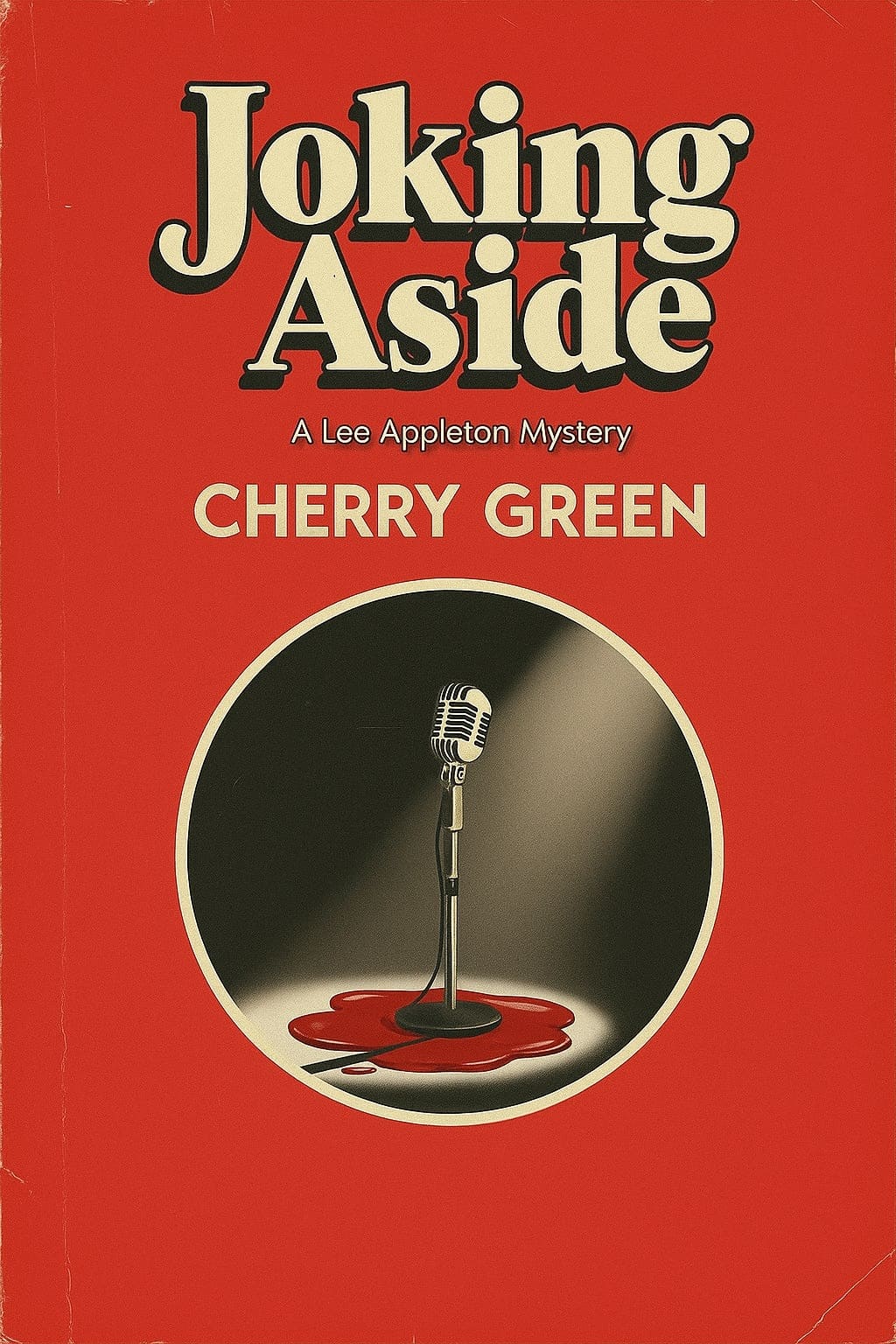
When I tell people I used to be a stand-up comedian, they tend to imagine one of two things. Either it’s all bright lights and big laughs, or it’s something a bit sadder. Desperate men shouting into microphones in sticky pubs, certain that one day they will make it big.
The reality is more complicated than either version. And it’s that gap — between what people think they see and what’s actually going on — that led me to write Joking Aside.
What People Don’t See About Stand-Up Comedy
I spent around eight years on the UK stand-up circuit in the 2000s. It’s a strange, intense world. One night you might be performing to six people in a pub function room. The next, you’re meeting television producers. In between, you’re sharing long late-night car journeys with people you barely know, bonded by the odd intimacy of doing something slightly absurd together.
Most of the time, it’s brilliant. I remember the laughter most of all — not just on stage, but afterwards. The ridiculous conversations, the sense of being part of something ludicrous and alive.

But there’s another side to it that doesn’t tend to make it into the popular imagination.
Comedy is all about reading people. Understanding a room, sensing its mood, pushing it to the edge of discomfort and then pulling it back again. The best comedians are incredibly skilled at this (I was not). They can make an audience feel almost anything — and then convince them to laugh at it.
This creates a climate where boundaries are constantly tested. Where discomfort becomes humour.
When Everyone Else Is Laughing
What stayed with me long after I stopped performing was how often behaviour that felt genuinely wrong was dismissed or minimised. A man who wouldn’t take no for an answer was “a bit awkward.” Someone who pushed things too far was “just having a laugh.”
And if everyone else is laughing, it becomes very difficult to be the one person who says: this isn’t okay.
I have plenty of stories from that time: from getting sexually assaulted onstage by a compère (biggest laugh of the night) to genuine stalking and threats. But what came to interest me later was the atmosphere around those incidents. The way you learned to smooth things over, laugh things off and keep the mood light even when something was seriously off.
In the early 2000s, women on the stand-up circuit were still a novelty. You were often the only woman on a bill because promoters genuinely believed more than one woman might somehow “ruin” the night. As a result, you became very good at reading situations and navigating male-dominated spaces without making it obvious you were doing so.
Looking back, I realise how often instinct was overridden by group dynamics. How easy it is to ignore discomfort when everyone around you is doing the same.
That became the seed for Joking Aside.
The book follows Lee Appleton, a private investigator — and reluctant psychic — as she investigates the disappearance of a successful comedian. On the surface, it’s a mystery. Underneath, it explores how easily we misread people, and how often danger hides in plain sight.
The “Harmless” Man
One of the central characters is loosely based on someone I knew on the circuit. If you’d asked anyone to describe him, you would have heard the same thing on repeat: Shy. A bit strange. Harmless.
Exactly the sort of person people underestimate. And I definitely underestimated him! Twenty years later, I would be horrified, but not surprised if I heard he had killed someone.
He wasn’t a literal inspiration, but he embodied something I found increasingly interesting: the gap between perception and reality. It’s comforting to believe we would recognise a dangerous person if we met one. That there would be obvious signs. But in reality, performing harmlessness comes easily to some.
Writing the book made me reflect on moments from my own past — times when something felt off, but I ignored it because everyone else seemed comfortable.
It’s not just limited to comedy clubs. Most of us have probably experienced situations where we brushed off something dodgy because no one else seemed fussed. That tension became central to Lee as a character. She notices things others miss, but she doesn’t always trust herself enough to act on them.
I don’t expect readers to come away from Joking Aside with a neat moral. But I do hope it leaves them with a slightly sharper awareness. A willingness to pause, question, and trust their instincts even when those instincts go against the mood of the room. To ask themselves: Have you ever ignored your instincts because everyone else was laughing?
By Cherry Green
Cherry Green is a Queensland-based British writer. Joking Aside is her debut novel.







Amazing debut novel