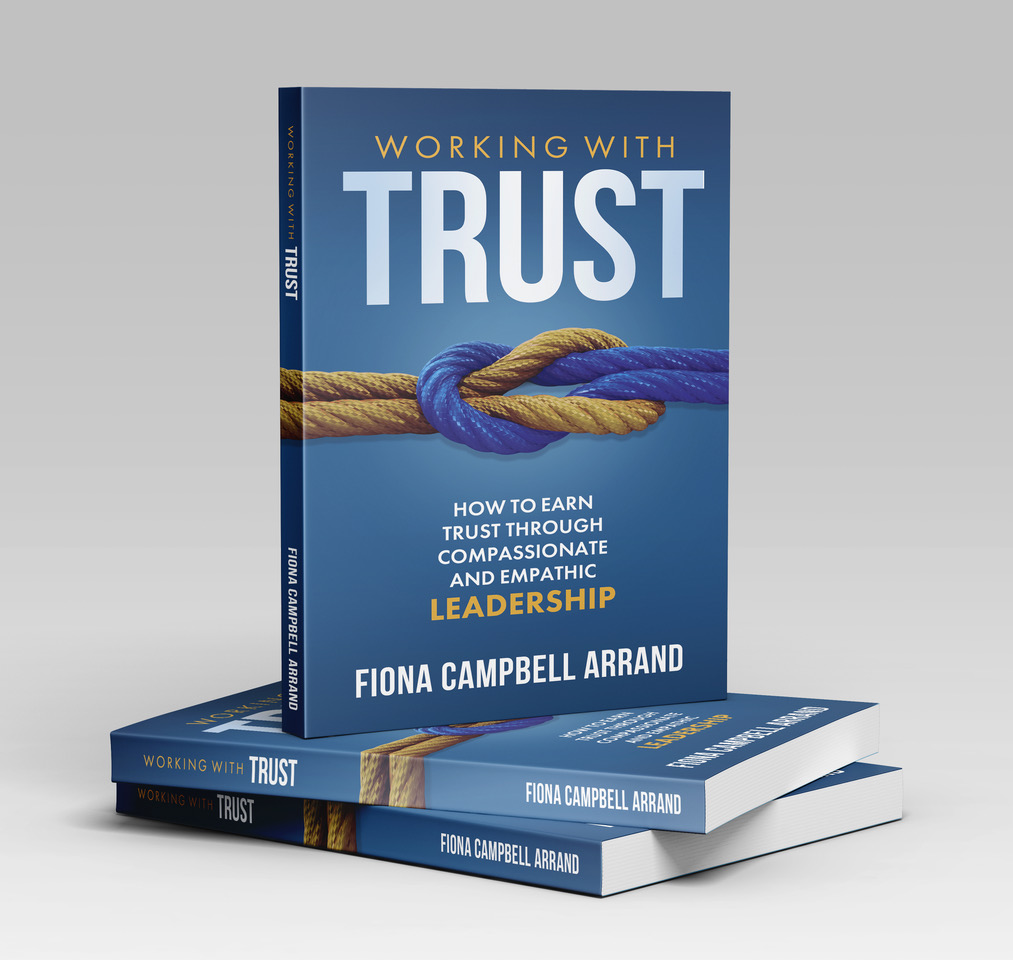
I wrote my first leadership book Working with Trust at the age of 72 after a conversation I had with my late husband, Duncan Arrand.
Duncan was one of the most natural leaders I have ever known. He worked at senior level in the construction industry, leading teams across different countries and cultures. What stood out to me was not just his experience, but how he led people.
He believed in supporting the people he worked with and trusting them to make their own decisions. Even when things didn’t go to plan, he saw that as part of how people learn. His view was simple: if you give people responsibility, space to think for themselves and trust them to get on with things, they grow in confidence and capability.
At one point asked him what he thought was the most important quality for a leader. He didn’t need to think about it.
“Trust.”
His answer resonated with me, particularly because of the work I have been doing for many years with leaders, coaches and business professionals. Often trust is talked about, and yet rarely is it broken down into something practical that people can learn to do.
It was always there as an idea, something people agreed was important yet doing nothing about it.
What I wasn’t seeing anywhere was a clear explanation of how leaders can build trust with the people they lead.
For over 35 years I have been using NLP skills in the coaching and training work I do, focusing on how language and behaviour shape outcomes. Over time, I began noticing patterns in the way leaders communicated with their team members, especially in everyday interactions.
Conversations that sounded clear on the surface did not clarify what was really required. Agreements were assumed rather than confirmed. Messages that were interpreted differently to what was intended.
In isolation, these interactions didn’t seem significant, but when added up on a daily basis they had a noticeable impact.
When people trust one another, they tend to think more clearly, speak more openly and take responsibility for what they are doing. When you don’t trust someone, something else begins to happen.
You start hesitating, overthinking, holding back what you really want to say and performance can drop.
What became increasingly clear to me was that people don’t just automatically trust each other, trust needs to be earned. It comes from how we behave and how we speak to each other, particularly when working closely every day.
And that is where many leaders were getting stuck, they didn’t realise the impact of what they were saying or doing was having on how they were trusted by their team members.
I began writing Working with Trust just a few months before Duncan died.
He knew he was terminally ill and accepted it with a level of calm and clarity that I found remarkable. During that time, we continued to do something we had always enjoyed – challenging each other’s thinking.
I would bring an idea, and he would question it. Not to dismiss it, but to make sure it was well thought out. He had a way of asking exactly the question that made you stop and think more carefully.
When I started developing the concept for the book, those conversations became part of the process. One evening stands out clearly. We opened a bottle of champagne and sat together sketching ideas, testing what worked and what didn’t. That was where the early thinking behind the TRUST and CIRCLE frameworks began to take shape.
Not as theory, but as something that could be used in real situations. That’s when I discovered that although there are many leadership books that talk about trust and how much it matters in the smooth running of a team, I still felt there was a lack of clarity around how to build genuine trusting working relationships:
What specifically do you say?
What do you do differently?
How do you handle the moment when something starts to go off track?
Through my work using NLP skills, I had already been helping leaders develop more impactful communicating skills by developing precision in their language and more awareness of their behaviour. I could see how small adjustments in how someone asked a question, gave feedback or responded under pressure could completely change the outcome of a conversation.
That is what I wanted to bring into this book, easy ways of earning, building and sustaining trust with others.
Something that leaders could apply immediately with their teams, rather than something that simply sounds good in principle.
I wanted my readers to have frameworks in the book are designed to be simple to use.
The TRUST framework helps leaders learn ways of building genuine trust within a team and The CIRCLE framework supports them in sustaining that over time.
They are not complex models. They are practical ways of paying attention to what is happening in real conversations. Plus, I give examples of how I have been using the elements of the frameworks in my own leadership development and coaching work over many years.
My aim is that readers become more consciously aware of what they are already doing automatically.
To recognise the times when things need clarified.
To adjust how they communicate so that their message lands as intended.
To create an environment of physiological safety where people feel able to contribute, think for themselves and follow through on what they say they will do.
Because once that starts to happen, the shift in a team can be significant.
What I learned writing this book is that it gave me the opportunity to reflect on what I have seen consistently over many years of working with leaders.
Trust is not something abstract. It is experienced through regular interaction.
It is shaped by how clearly people communicate, how well they listen and how consistently they follow through.
And importantly, what happens externally is always influenced by what is happening internally. What someone does in the outside world is affected by what they are thinking and feeling in their inside world.
When leaders begin to understand that link, they start to lead with more awareness and intention.
This book was written because I wanted to make something clear that often feels vague. I wanted to share the times that I have seen the difference that small changes in language and behaviour can make to how people work together.
It ended up bringing together many years of practical experience that Duncan and I gained and as a tribute to the wonderful leader he was.
His belief in trusting people, supporting them to grow and allowing them to learn through experience is woven into everything I have written.
When people trust each other, work becomes easier, people communicate openly and honestly, and decisions are made more effectively.
That doesn’t happen by accident.
It happens through how people behave and how they speak to each other, consistently, over time.
By Fiona Campbell Arrand
 Fiona Campbell Arrand is the author of Working with Trust, a Business Coach and Leadership Development and NLP Trainer with over 35 years international experience supporting leaders, teams and organisations. She has delivered corporate training and coaching across sectors including government, banking, healthcare and industry, helping leaders strengthen communication, build trust and lead effectively in today’s fast-changing workplace.
Fiona is also the creator of the Working with Trust Framework™ NLP Leadership Programme, designed to help leaders think clearly, communicate with precision and build trust in an AI-supported workplace.
Amazon link: https://www.amazon.co.uk/dp/1918123101
Website: www.theprofessionalgrowthcompany.com
Email: fiona@theprofessionalgrowthcompany.com