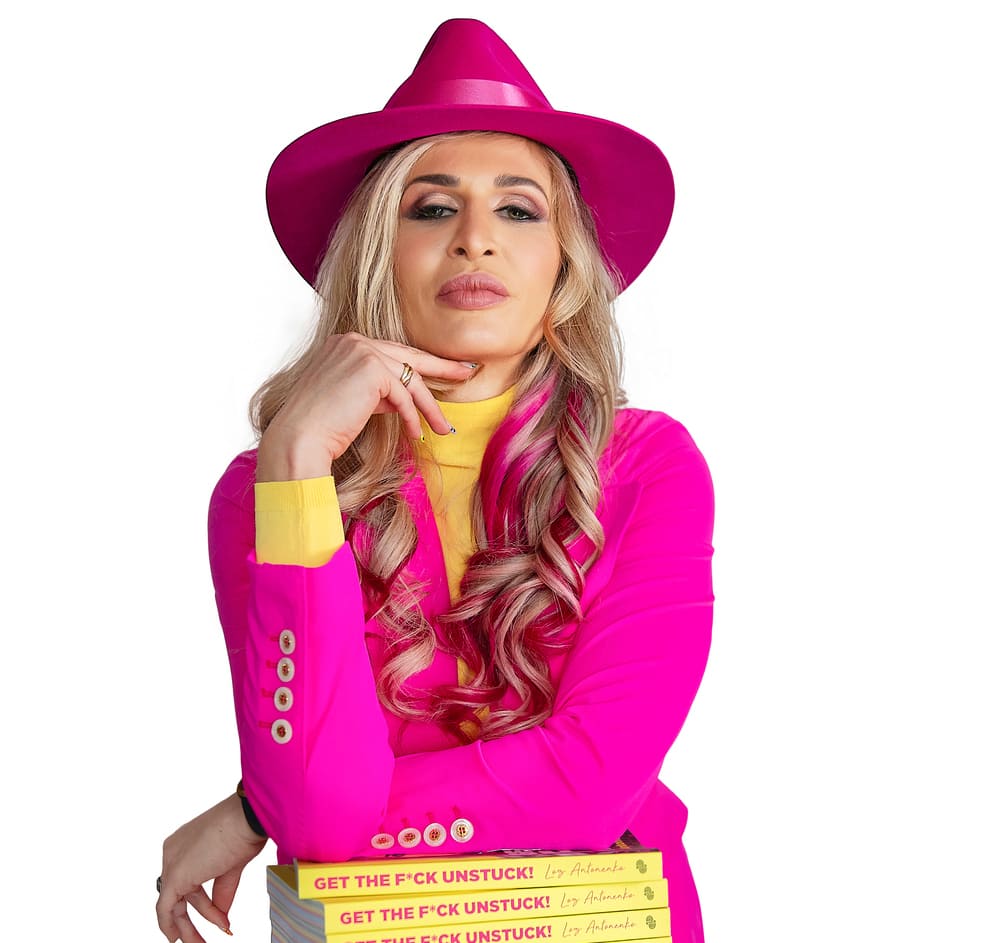
I didn’t write Get The F*ck Unstuck! because I had a slick content strategy or a publisher chasing me. I wrote it because I’d lived through something so brutal, so real and ultimately so transformative that staying quiet felt like a betrayal of every person who’d ever thought, I don’t know how to keep going.
I wrote it because I’ve been completely stuck. Not the “ugh, career plateau” kind of stuck. The kind where the floor genuinely disappears and you have absolutely no idea how to get back up.
Why this book exists
In 2016, I lost my husband Brian to suicide. In the years that followed, I lost my sense of self, my health, my certainty and the life I thought I was building. I was managing my own complex autoimmune conditions, rebuilding my business and quietly trying to figure out who I even was anymore.
I had a background in health, fitness and behaviour change. I had qualifications and experience. I deeply believed in the power of habits and mindset and I still couldn’t move.
That gap, between knowing what you should do and actually being able to do it, is what this book is really about. That’s where most people are living, and almost nobody is talking about it honestly.
The problem nobody wants to admit
Over years of working as a health and behaviour change coach, personal trainer and speaker, I kept seeing the same pattern.
The thing is, people don’t fail to change because they lack information – they fail because they’re trying to outthink feelings they haven’t processed, because their habits are built on fear rather than genuine desire and because the gap between where they are and where they want to be feels so enormous that taking any step at all seems pointless.
Most of the books, programs and advice designed to help weren’t reaching the people who needed them most. The gentle, pastel-coloured messaging works beautifully for people who are already moving. It doesn’t work for someone who is genuinely, painfully stuck.
The title raises eyebrows and it’s meant to! The people who need this book most have already tried the five steps to their best life. What they need is someone to sit across from them and say, with warmth and zero judgement: “I’ve been there. Now let’s get you out.”
The F*ck isn’t shock value, but rather permission. Permission to be honest about where you actually are, not where you’re pretending to be. Permission to be frustrated. Permission to start exactly where you are, even if that place is messy, complicated and a long way from where you thought you’d be by now.
What the book actually covers
I wrote about the neuroscience behind why we stay stuck, about grief, identity and rebuilding a life piece by piece when you stop trying to fix everything at once and start asking better questions. About what I call The Handbrake Habits, the behaviours that look fine on the surface but are quietly keeping you in place. And about the small, consistent, unglamorous actions that actually work.
I’m most proud that the book doesn’t pretend that transformation is pretty. Real change is awkward and non-linear. It involves setbacks that feel like failure but are, in fact, data. It involves getting honest about the stories you’ve been telling yourself and deciding which ones you’re done carrying.
There’s also joy in here because this isn’t just about surviving. It’s about building a life that actually fits you, not one that looks impressive on the outside while you’re quietly falling apart within.
The journey behind the writing
Writing this book was part of my own healing. Some chapters poured out in hours. Others took weeks, not because I didn’t know what to say but because saying it meant going back to places I’d worked hard to leave. I’m glad I went back. Every uncomfortable truth I sat with on the page became something I could hand to a reader sitting with their own.
There were moments I questioned whether I had the right to write it at all. Who was I to offer guidance when I was still, in many ways, figuring it out myself? But I kept coming back to the same answer: that’s exactly why I had to write it. Not from the summit of having everything sorted, but from the middle of the climb, looking back at someone still finding their footing and saying, “This way”.
What I hope readers experience
People have read this book through divorce, burnout, loss, mid-crisis and in the quiet in-between moments when life hasn’t fallen apart but doesn’t quite feel right either. They tell me they felt seen. That’s the whole point. Not to showcase expertise, but to make someone feel less alone in their stuck-ness and more capable of taking one step.
The transformation I hope for isn’t dramatic or overnight. It’s the moment a reader stops pretending the situation isn’t what it is. The moment they realise that stuck isn’t a character flaw or a life sentence. It’s a signal, and signals can be read and responded to.
The lesson I’d carry forward
If I learned one thing from writing this book, and from the years of living that made it possible, it’s this: the people who get unstuck aren’t the ones who had it easier or who knew more. They’re the ones who were willing to be honest, to ask for help and to take one imperfect step before they felt ready.
If you recognise yourself in any of this, this book is for you. You don’t have to be ready. You don’t have to have it figured out. You just have to be willing to stop pretending the situation isn’t what it is and to consider that there might be another way through – because there is. I promise you there is.
By Loz Antonenko
 Loz Antonenko is a health and behaviour change coach, personal trainer, motivational speaker and author based in Queensland, Australia. Known as The Mojo Mentor, she helps high performers, business owners and everyday humans build sustainable habits so they can feel better, function better and avoid burnout.
Her first book, Get The F*ck Unstuck!, is available now. Her new book, Quit Feeling Sh*t! drops in the second-half of 2026. Connect with her on social media @lozantonenko or at lozlife.com.